
A Field Guide to the Visitors: What We Actually Know About the Different Types of Non-Human Intelligence

The conversation around UAP has changed so dramatically in the past few years that we are now at a point where a former senior intelligence officer testified under oath before Congress that the United States government has recovered craft of non-human origin and biological material from those craft. That happened in July 2023. David Grusch, who served 14 years as an intelligence officer in the Air Force and National Geospatial Intelligence Agency, told the House Oversight Committee's national security subcommittee that he was informed of a multi-decade UAP crash retrieval and reverse-engineering program, and that he had interviewed officials who had direct knowledge of aircraft with nonhuman origins and that biologics were recovered from some of those craft. CBS News
He did not describe what those biologics looked like. That part stayed classified.
But the question of what non-human intelligence actually looks like, how many different kinds there might be, where the reported types come from in the historical record, and what any of it might mean has been circulating in serious research and popular culture simultaneously for decades. Since we are building an investigative archive at Verso, it is worth doing what nobody else seems to want to do: lay out the actual documented history of each major reported type, trace where the descriptions came from, note what is credible and what is clearly cultural contamination, and let readers form their own conclusions.
This is not a list of species from a science fiction franchise. This is a map of what people have actually reported, where those reports originate, and what legitimate researchers have made of them.
The Greys: The Most Documented and Most Debated
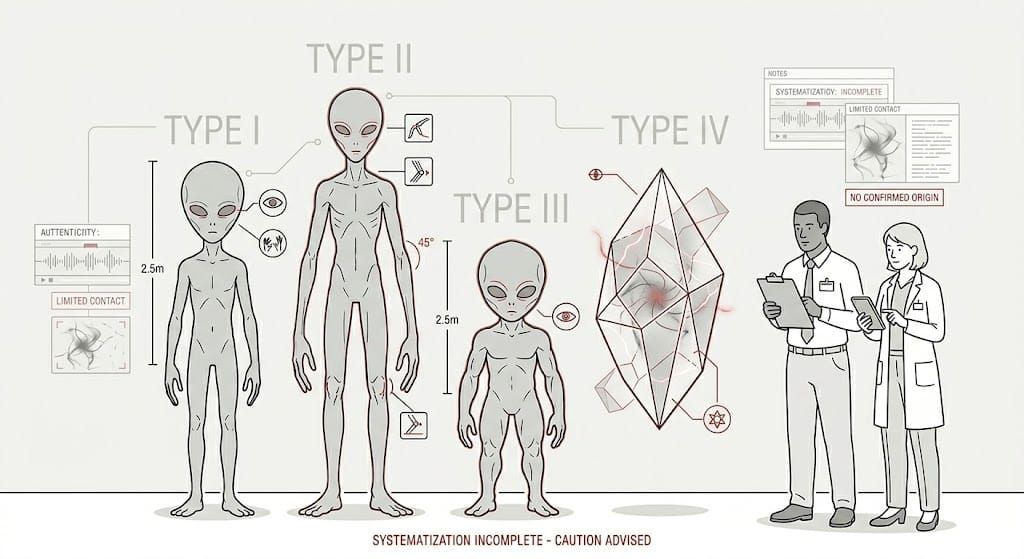
If you close your eyes and picture an alien, you almost certainly see a Grey. Large cranium, enormous dark almond-shaped eyes, thin body, grey or pale skin, no visible hair, minimal facial features. This image is so embedded in popular culture that it is almost impossible to assess it clearly anymore.
The clinical description is consistent across thousands of independent reports spanning decades and continents. Greys are typically described as short, standing about three to four feet tall, with frail, thin bodies, massive heads shaped like an inverted teardrop, and large black almond-shaped eyes. Communication is consistently described as telepathic rather than verbal. Reports associate them with genetic experiments and the creation of hybrid offspring, and they are described as having enhanced intelligence and advanced genetic knowledge.
The case that planted this archetype in the modern imagination is the Betty and Barney Hill abduction of September 19, 1961, in the White Mountains of New Hampshire. The Hills claimed that they saw bipedal humanoid creatures in the window of a large spacecraft that had landed in a field, after which they had no recollection of the next two hours. The case is regarded as the first well-documented, feasibly legitimate UFO abduction in history. With the help of psychiatrist Benjamin Simon, the couple eventually revealed that gray beings with large eyes had walked them into a metallic disc. Under hypnosis both described being taken inside the craft and subjected to medical procedures in separate examination rooms with curved walls.
What makes the Hill case genuinely interesting to me as an investigator is not just the testimony itself but the layers of context around it. Critics suggest that hypnosis may have implanted or reinforced false memories, particularly from Betty's repeated dreams of the abduction before hypnosis. But others argue that their story predates the Grey alien stereotype, making it more compelling rather than less. There is also the physical evidence: Betty's dress was torn and stained, Barney's binocular strap was broken, their watches had stopped working, and there were strange circles on their car. Those physical anomalies were not products of hypnosis.
Nearly everything we know or think we know about alien abductions begins with Betty and Barney Hill. They were the first people to describe aliens as short, grey-skinned beings rather than the men in jumpsuits that science fiction had been producing, and they were the first to be widely believed. The template they established has been replicated in accounts from people who claim no knowledge of the Hills' case, across cultures and languages, which is the detail that serious researchers find hardest to dismiss.
The Greys also occupy the center of what whistleblower testimony and government acknowledgment has gestured toward, even if indirectly. In a recent briefing by the UAP Disclosure Fund, Eric Davies identified four distinct alien types the U.S. government is claimed to know about: Greys, Nordics, Insectoids, and Reptilians. Greys lead that list, and they have for decades.
What the Greys represent in the broader framework of UAP research is an intelligence that appears primarily interested in biology: collecting, sampling, cataloguing, running procedures on living humans and animals. The cattle mutilation phenomenon, which has its own substantial evidence base of surgically precise incisions and complete exsanguination with no tracks and no blood at the scene, maps onto this behavioral pattern whether or not the Greys are responsible for it.
The Nordics: The Ones Who Keep Warning Us
The Nordic type sits at the opposite end of the aesthetic and behavioral spectrum from the Greys. Reports of encounters with tall, blonde, blue-eyed extraterrestrials, eerily similar to humans yet possessing extraordinary abilities, have persisted since the 1950s. These beings stand in stark contrast to the small, grey entities that would come to dominate alien abduction narratives.
Nordics are essentially human-looking but considerably taller than most humans, standing at least seven feet tall, with blue eyes and blonde hair. They are perhaps the most benevolent of all reported alien types, offering civilized dialogues with witnesses and reportedly having supernatural abilities including psychic powers, telepathy, and dematerialization.
The behavioral profile of Nordic encounters is distinct and consistent. Rather than abducting and examining, they appear to warn. Almost every documented Nordic encounter involves an urgent communication about nuclear weapons, environmental destruction, or the direction of human civilization. Travis Walton, whose alleged 1975 abduction ranks among the most famous cases involving Nordic entities, described them as human enough that you feel an immediate connection.
The most persistent and controversial claim associated with the Nordic type involves President Eisenhower. The story claims that Nordic aliens offered to share technology with the United States in exchange for nuclear disarmament, but Eisenhower rejected their proposal. Instead, he supposedly made a deal with Grey aliens, allowing limited human abductions in exchange for technology, with no requirements to abandon nuclear weapons. Officials at the Eisenhower Presidential Library have dismissed these claims, and no credible evidence supports the story. I include it here not because it is verified but because it illustrates something important: in almost every version of this narrative, the Nordics are the ones asking us to put the weapons down, and we refuse.
The question that legitimate researchers ask about the Nordic type is an uncomfortable one. The description of tall, beautiful, blonde, blue-eyed beings with extraordinary abilities maps uncomfortably well onto certain racial ideologies of the twentieth century. Whether the Nordic archetype in UFO culture is a genuine phenomenon or a projection of existing cultural anxieties about racial hierarchy and eugenics is a live debate. It is also possible, of course, that it is both: that some encounters are real and that the cultural frame through which witnesses interpret and report them is inevitably contaminated by the world they live in.
The Reptilians: Ancient History, Modern Conspiracy, and a Core of Something Real
I am going to be transparent here: the Reptilian category is where legitimate research and pure conspiracy fiction are most tangled together, and separating them requires more care than the other types.
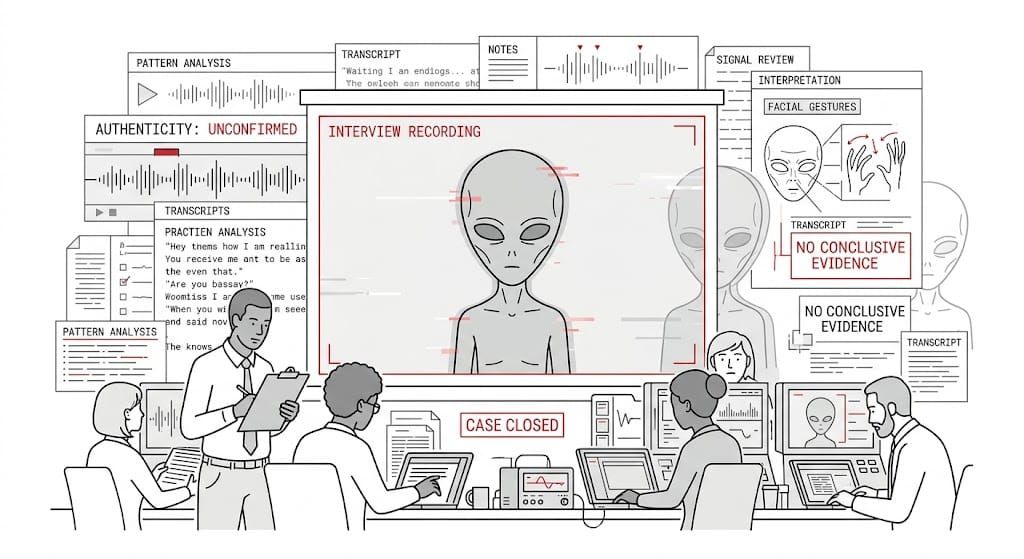
The basic description is a tall, muscular, scaled humanoid with reptilian features, generally described as intelligent, calculating, and not particularly interested in human wellbeing. The Lacerta Files of 1999 are an anonymous Swedish source that released interview transcripts with a Reptilian woman called Lacerta, allegedly revealing details about her species, underground civilizations, and their view of humanity. The documents are unverified but widely circulated in UFO circles.
The conspiracy layer on top of this is where things become genuinely problematic. The claim that Reptilians shapeshift and secretly control governments, financial systems, and media is the version most people have heard, largely because it was aggressively promoted in books that have sold millions of copies. That version of the Reptilian narrative carries disturbing undertones of older antisemitic conspiracy frameworks and should be treated with significant skepticism.
What is more interesting to me as a researcher is the evidence base underneath that layer, which predates the modern conspiracy narrative entirely. Descriptions of intelligent serpentine beings appear in Sumerian texts, in Hindu cosmology as the Nagas, in Mesoamerican religious traditions, in West African mythology, and in the Hebrew Bible. The consistency of serpent-associated intelligent beings across cultures that had no contact with each other is either a fascinating coincidence, a common archetype emerging from human psychology, or something else entirely. Serious researchers including Zecharia Sitchin, whatever one thinks of his conclusions, spent decades documenting this cross-cultural pattern.
The Reptilian type also appears in credible abduction testimony, generally described as being present in an oversight or command capacity alongside Grey entities rather than conducting procedures themselves. Some regression-based testimonies describe encounters with tall, scaled beings who exude dominance and control, occasionally overseeing Greys or other entities. That hierarchical dynamic, if it reflects something real, tells a different story than either the pure conspiracy narrative or the simple dismissal.
The Insectoids and Mantis Beings: The Most Unsettling Reports
This category gets less media coverage than the others, which is interesting given how consistently it appears in clinical abduction research. Insectoids are described as having insect-like traits including multiple limbs, exoskeletons, mandibles, and sometimes antennae. The most commonly reported variant resembles a praying mantis, and most reports suggest these beings communicate telepathically.
Mantis beings appear most frequently in accounts documented by researchers working directly with experiencers in therapeutic settings. They are consistently described as tall, standing six to seven feet, with triangular heads, large compound-style eyes, and long thin limbs. What sets them apart in the testimony is the role they seem to occupy: not as the beings conducting procedures, but as supervisory or medical presences, sometimes described as calming or regulating the fear response of abductees.
Greys and Mantis beings dominate clinical abduction stories. The fact that two types appear together with consistent regularity across independent accounts from people who do not know each other is one of the features of abduction research that is hardest to explain away through cultural contamination alone.
The Hybrids: Where the Programs Allegedly Converge
The hybrid category is reported most frequently by individuals who describe multiple encounters over years or decades rather than a single isolated event. The basic claim is that there is an ongoing program of genetic mixing between human biology and one or more non-human species, producing beings that carry characteristics of both.
Therapist Barbara Lamb has documented numerous clients who report repeated encounters with hybrid beings and describe a sense of emotional connection or parental responsibility toward them. The consistency of the emotional dimension across these accounts is notable: witnesses do not describe hybrids as threatening but as familiar, in a way that disturbs them precisely because of how natural that familiarity feels.
Whether this represents a genuine program, a psychological phenomenon, or something produced by the specific dynamics of long-term hypnotic regression therapy is genuinely unresolved. What is clear is that the hybrid narrative appears independently across too many cases to be attributed to a single source or influence.
Where the Government Sits on All of This
None of these types have been officially confirmed by the United States government or any other government. That is the honest statement of where the public record sits.
What has changed is the character of official acknowledgment. Grusch stated that analysis of recovered objects determined them to be of exotic origin based on vehicle morphologies and material science testing and the possession of unique atomic arrangements and radiological signatures. He was clear: "We are not talking about prosaic origins or identities."
Vehicle morphologies. That phrase is doing a lot of work. It means the shape of the recovered craft was evaluated and found to be inconsistent with human engineering. If biological material was also recovered from those craft, the question of what biological type is unavoidable, even if every specific answer remains classified.
Grusch also addressed how these craft might travel, suggesting that the mathematics of additional spatial dimensions and what we experience as linear time ending up as a physical dimension are relevant frameworks, and that the craft may not be traveling through space as we understand it. That framing overlaps directly with what I explored in my previous piece on the EBE-3 video, the claim that time travel necessarily involves spatial displacement, and it suggests that whatever the government knows or thinks it knows about these phenomena, the physics involved is not conventional.
What the Taxonomy Actually Tells Us
When you lay all of this out together, several patterns emerge that are worth sitting with.
The types are not random. The Greys are associated with biology and collection. The Nordics are associated with warnings and communication. The Reptilians are associated with control and long-term historical presence. The Insectoids are associated with medical oversight. Each type has a consistent behavioral signature across independent reports from different countries, decades, and cultural contexts. That consistency is either the most compelling feature of the evidence base or the most damning, depending on whether you think it reflects a real taxonomy or a shared cultural script.
The types also appear to interact with each other in consistent ways. Multiple entities, different types present simultaneously, with apparent hierarchical relationships between them, is a recurring feature of serious abduction testimony. That organizational structure, if it reflects something real, suggests not a collection of separate species visiting independently but something more coordinated.
And then there is the question of what all of this is for. The Greys collect biology. The Nordics warn about destruction. The hybrids suggest a long-term genetic investment in human continuation. If you read that as a program rather than a series of random encounters, the picture that emerges is of something that has been here for a long time, that has an interest in what happens to us, and that is managing that interest through multiple channels simultaneously.
I am not telling you what to believe about any of this. What I am telling you is that the taxonomy of non-human intelligence is not a product of science fiction. It is a body of testimony, physical evidence, and now partial official acknowledgment that has been accumulating for seventy years, and the pattern inside it is too consistent to dismiss and too strange to explain.
That is exactly the kind of problem Verso was built to investigate.
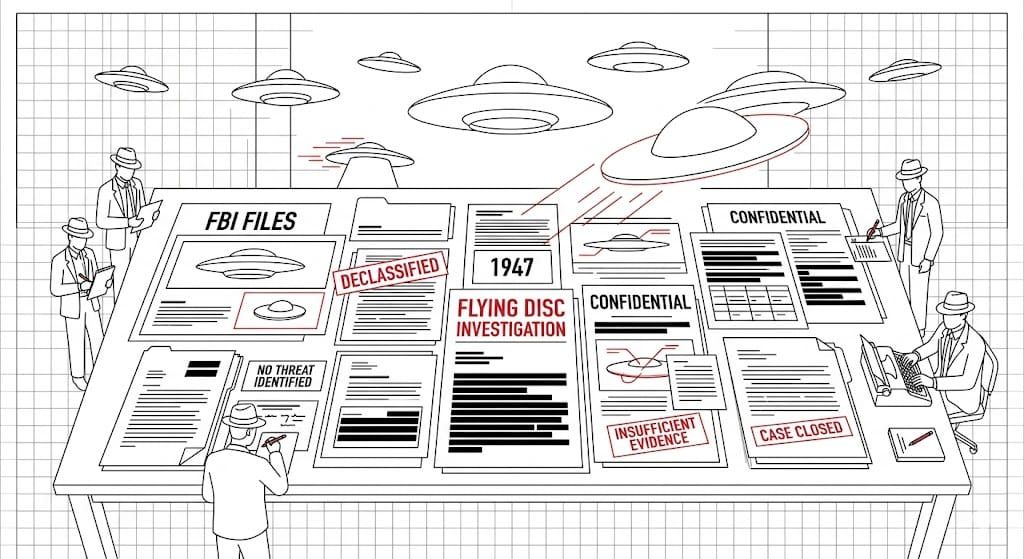
This piece is part of Verso's ongoing investigative series on UAP disclosure, declassified government documents, and non-human intelligence. Previous installments cover the 1947 FBI flying disc files and the EBE-3 alien interview. All source documents cited in this series are publicly available.
Subscribe to our newsletter
Subscribe to our newsletter to get the latest updates and news








Member discussion