



members only
Dream Interpretation
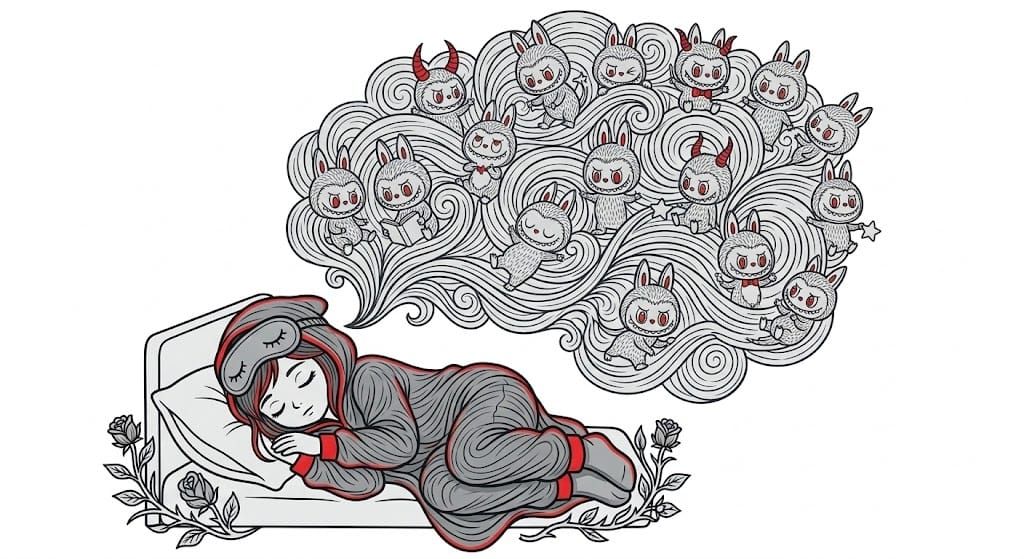
Dream interpretation is more than just flipping through a generic dictionary; it’s a deeply personal dialogue with your own psyche.
Ever wake at 4:00 AM with the echo of a dream still ringing in your ears? That lingering, half-lit sensation, your brain just tried to tell you something vital, but it spoke in riddles and surrealist metaphors, and now it's dissolving like frost on a window.
Most guides on dreams feel like reading the instruction manual for a toaster. Dry, clinical, impersonal. They miss the pulse entirely. Dream interpretation isn't a procedure you perform on yourself; it's a messy, deeply personal excavation of your own psyche, and it rewards patience, honesty, and a willingness to sit with discomfort. If you want to move past the "Google the symbol" phase and find actual depth, you have to stop treating your dreams as puzzles to be cracked and start treating them as conversations already in progress.
Here is how you learn to listen.
The 4:00 AM Scrawl
If you don't write it down the second you surface into consciousness, it's gone. Not faded, gone. Trying to recover a dream an hour after waking is like trying to grab smoke with bare hands.
Keep a journal, but not a curated one. Not something pretty that you're afraid to ruin. A "scrawled in the dark, handwriting barely legible" journal. Record the people, the jarring shifts in location, the images that felt charged with meaning you couldn't quite name. But more than the what, chase the how. How did the air feel? Oppressive, or strangely electric? Was there a sound, a specific song, a hum, a silence that felt louder than noise? Was the light warm, or was it the cold fluorescence of a place you didn't want to be?
Those sensory textures are the breadcrumbs that lead back to the source. They are often more revealing than the narrative itself.
The Language of Your Own Ghosts
A crow appears in your dream. One person thinks immediately of death. Another thinks of a trickster, a messenger, something clever and watchful. A third remembers a specific tattoo they saw on a stranger once, on a day that turned out to matter more than they realized.
Standard dream dictionaries are mostly a waste of your time, not because symbolism is meaningless, but because the dictionary isn't you. It carries the average of everyone else's associations, stripped of the only context that matters: your personal history.
When you encounter a symbol, the right question isn't "what does a crow mean?" It's: What does a crow mean to me, given the specific life I have lived? If you're a writer, a blank page in a dream is not a neutral image; it's a crisis. If you're a musician, a broken instrument might register as an existential threat. Your cultural background, your private wounds, the images that have accumulated weight over decades, these form the actual vocabulary of your dreams. No dictionary has access to that.
This is why dream interpretation is irreducibly personal. You are the only qualified translator.
The Gut Check: Emotional Resonance as Signal
The plot of a dream is often nonsense. You're running a marathon through a library while being chased by a giant cat, and somehow you're also late for a job you haven't held in fifteen years. Fine. The plot is not the point.
The emotions, however, are completely honest. They don't distort. When you wake with a profound, sourceless grief, or a strange soaring joy, or the specific flavor of dread that comes from being watched, that emotional residue is your actual data. It bypassed every layer of narrative confusion and arrived intact.
So, forget the cat and the library for a moment. Where in your waking life are you feeling that same precise shade of trapped, or exposed, or free? The dream is rarely inventing emotions from scratch. It's rehearsing them, processing the feelings you've been too busy, too distracted, or too guarded to fully experience during the day. The subconscious runs a kind of overnight emotional audit, and the results are often more honest than anything you'd admit to yourself at noon.
Connecting the Dream to the Mundane
Dreams don't arrive in a vacuum. They are in constant, intimate dialogue with the texture of your daily life, the tension in a relationship you've been avoiding naming, the creative block you've been rationalizing, the low-grade anxiety of a decision you keep deferring.
Pay attention to what Freud called day residue: the small, seemingly trivial details from your recent waking hours that the dreaming mind elevates into something larger. A throwaway comment from a colleague. A photo that caught your eye and scrolled past. A moment of unexplained melancholy on a Tuesday afternoon. Your subconscious, working overnight, has a way of taking these overlooked fragments and constructing a feature film around them, not to dramatize the mundane, but to show you why it actually mattered. The dream is arguing that something you dismissed deserves your attention.
Standing on the Shoulders of Giants
Sometimes your own perspective is the problem. You're too close to the material, too implicated in the story.
This is where two kinds of outside lenses help.
The first is archetypal. Carl Jung proposed that beneath the personal layer of the unconscious sits a deeper stratum, the collective unconscious, populated by universal patterns and images that human beings across cultures and centuries have shared: the Shadow, the Anima, the Wise Old Man, the journey into the underworld. When a dream has a particular gravity to it, a sense of myth or weight that feels larger than your personal circumstances, it may be touching these older, shared frequencies. Jung's framework isn't a replacement for personal interpretation, but it can offer a second layer of language when the purely personal feels insufficient.
The second lens is simply another person. Talk the dream out with someone who knows you well, a friend, a partner, a therapist. Describe it in detail, including the emotional texture, and let them respond without trying to control the interpretation. People who care about you but aren't living inside your skull can see connections you've unconsciously blocked. They aren't invested in protecting you from uncomfortable truths. That outsider position is genuinely valuable.
The Takeaway: It's a Dialogue, Not a Puzzle
The most common mistake people make with their dreams is treating them as problems to be solved, deciphered, concluded, and filed away. The snake means transformation. Got it. Moving on. But that's exactly the wrong relationship to have with your own inner life.
A dream is a conversation, not a riddle with a single correct answer. The depth doesn't come from arriving at a definition; it comes from sitting with the questions the dream is raising. Why are you still dreaming about a house you left fifteen years ago? Why does the person who wronged you keep appearing not as a villain but as something more ambiguous? What does it mean that you keep dreaming of water, and that sometimes it's the ocean, and sometimes it's a glass you can't quite reach?
These questions don't resolve. They deepen. And that deepening is the point.
Trust your intuition in this process. If a particular interpretation makes something shift in your chest, if it lands with that involuntary recognition, the slight widening of the eyes, that's usually the truth arriving. The rest is just your mind negotiating the distance between what it knows and what it's willing to say.
Your dreams are not speaking to you in a foreign language. They are speaking to you in the only language they know: your own life, compressed and made strange, offered back to you in the dark. Learning to listen is one of the more honest things you can do for yourself.
Works Cited
- Freud, Sigmund. The Interpretation of Dreams. Translated by James Strachey, Basic Books, 1955.
- Jung, Carl G. Man and His Symbols. Doubleday, 1964.
- Jung, Carl G. Memories, Dreams, Reflections. Translated by Richard and Clara Winston, Pantheon Books, 1963.
- Jung, Carl G. The Archetypes and the Collective Unconscious. Translated by R.F.C. Hull, Princeton University Press, 1969.
- Hobson, J. Allan. The Dreaming Brain: How the Brain Creates Both the Sense and the Nonsense of Dreams. Basic Books, 1988.
- Hartmann, Ernest. Dreams and Nightmares: The New Theory on the Origin and Meaning of Dreams. Plenum Trade, 1998.
- Johnson, Robert A. Inner Work: Using Dreams and Active Imagination for Personal Growth. HarperOne, 1986.
- Pagel, J.F. "Dream Science: Exploring the Forms of Consciousness." Progress in Brain Research, vol. 199, Elsevier, 2012, pp. 1–9.
- Stickgold, Robert, and Matthew P. Walker. "Sleep-Dependent Memory Consolidation and Reconsolidation." Sleep Medicine, vol. 8, no. 4, 2007, pp. 331–343.
- Walker, Matthew. Why We Sleep: Unlocking the Power of Sleep and Dreams. Scribner, 2017.
Subscribe to our newsletter
Subscribe to our newsletter to get the latest updates and news






Member discussion