
Not Every File in the Oswald Dossier Is About Oswald

- Record No. 104-10013-10185
- Agency: CIA
- Originator: FBI
One of the disciplines this series requires is honesty about what a document does not contain. Not every record in the JFK assassination files is a revelation. Some of them are routine. Some ended up in the collection because of how the CIA organized its files, not because of what they say. This is one of those documents, and explaining why it is here teaches something worth knowing about how intelligence agencies build dossiers.
What the Document Is
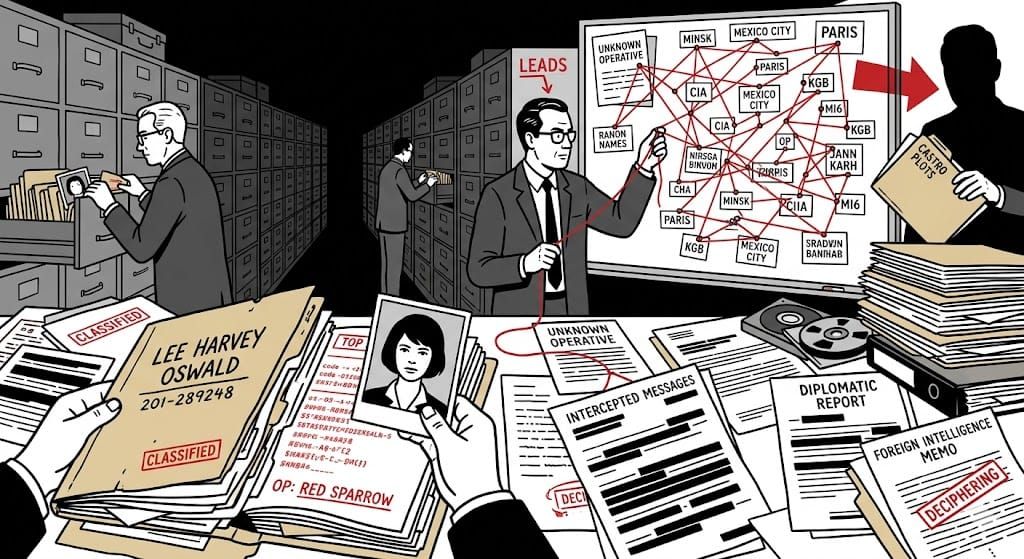
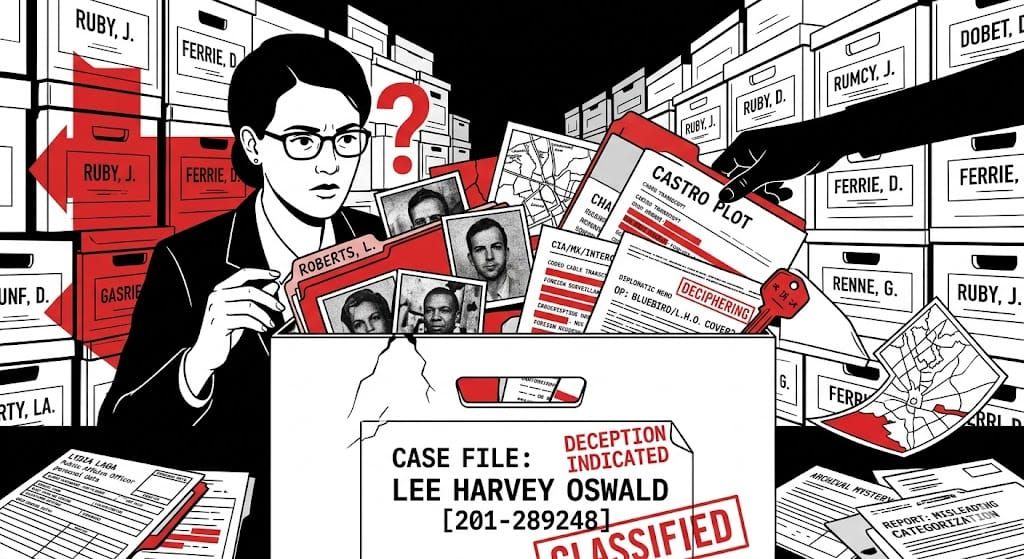
DocID 32108327 is a five-page CONFIDENTIAL packet dated September 28, 1964, consisting of a cover letter from Clark D. Anderson, FBI Legal Attache in Mexico City, to Winston M. Scott, the CIA's Mexico City Station Chief, and two enclosed memoranda. The subject is a Cuban national named Oscar Rodriguez Molina. The document was filed under CIA agency file number 201-289248, which is the same file number as the Mexico City intercept transcript reviewed in the previous entry in this series: Lee Harvey Oswald's CIA 201 dossier.
The cover letter is brief. Anderson tells Scott he is enclosing memoranda about Rodriguez Molina that may be of interest. The two enclosures, drawn from Mexican Immigration Department files through a source designated T-1 whose reliability is described as established, document Rodriguez Molina's movements between Cuba and Mexico from 1960 through 1964.
What the Document Says
Rodriguez Molina was a Cuban citizen born in Jaruco, Havana, in 1930. He had served as a Sergeant in the Cuban National Police until April 1959, when he resigned citing disapproval of police operations. He subsequently worked as Chief of the Water Pipe Tank Department of the Albear Aqueduct in Havana until September 1960. He traveled to Mexico as a tourist that month, returned briefly to Cuba, and then in November 1960 sought political asylum at the Mexican Embassy in Havana after claiming the Cuban intelligence organization known as the G-2 was persecuting him.
He was granted political asylum in Mexico in February 1961. Over the following years he moved between Mexico and Cuba, married a Mexican citizen, and by April 1964 had been admitted to Mexico as an immigrant on the basis of his marriage. He entered Mexico City on July 18, 1964, on a Cuban passport issued in January 1963, and was employed at the Versalles Pharmacy at a salary of 1,000 pesos per month, approximately eighty U.S. dollars. His Mexico City address was Sindicalismo No. 37, Apartment 317, Colonia Escandon.
A second short enclosure simply confirms that source T-1 has furnished reliable information in the past.
Why It Is in Oswald's File
Rodriguez Molina has no documented connection to Lee Harvey Oswald. He is not mentioned in any of the intercept transcripts reviewed in the previous entry. There is no indication in this document or in any publicly available record that he had contact with Oswald during Oswald's September and October 1963 Mexico City visit, which took place a full year before this report was even written.
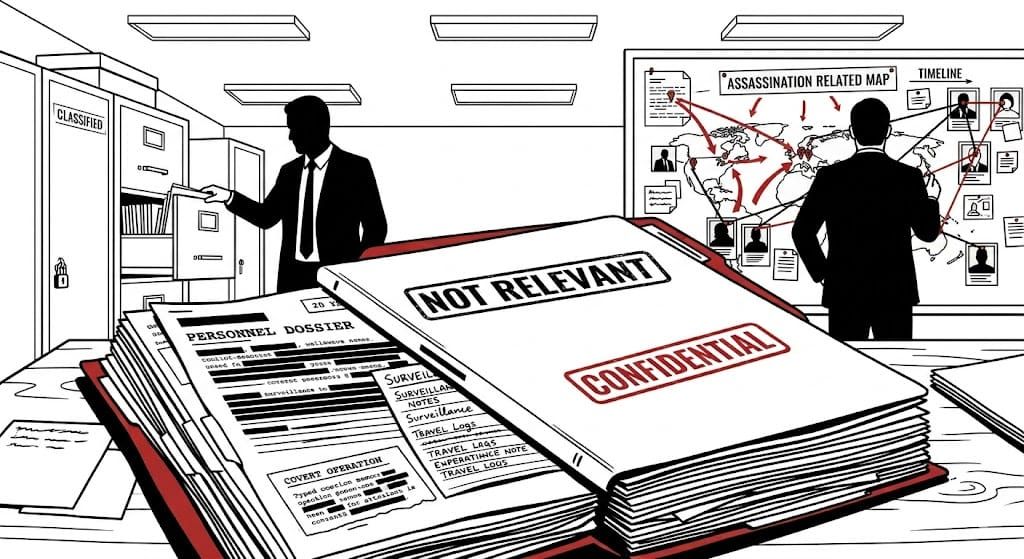
His presence in Oswald's 201 file reflects a standard CIA practice. The 201 file was not a narrowly curated evidence file. It was a living dossier, and the Mexico City station routinely filed into it any intelligence touching on Cuban exile activity in Mexico City that might, under some future analytical scenario, prove relevant. Rodriguez Molina was a Cuban national with a G-2 persecution claim, a history of travel between Cuba and Mexico, and a fresh entry into Mexico City in mid-1964. From the station's perspective, that profile made him worth noting in the file associated with the most sensitive Cuba-connected case the agency was managing.
That filing decision tells us something useful about how intelligence dossiers work. The Oswald 201 file was not assembled with the precision of a legal case file. It was built by accumulation, with material added whenever a case officer judged it potentially relevant. The result is a folder that mixes critical intelligence, like the Mexico City intercept transcripts, with peripheral counterintelligence monitoring of Cuban exiles who happened to pass through the same city. Distinguishing between those categories is part of what reading these records requires.
What It Contributes to the Series
This document contributes one thing of genuine value to the Reading the Record series: a clear example of what routine looks like in this collection. The previous entry contained verbatim intercepts of Oswald's phone calls to the Soviet and Cuban embassies, a document classified TOP SECRET for thirty years and folded into Oswald's file because it contained direct intelligence about the man at the center of the assassination investigation. This entry is what else ends up in the same file folder, a two-page immigration summary about a Cuban pharmacist in Mexico City who crossed the attention of the FBI Legal Attache in September 1964.
The difference between those two documents matters. A series committed to factual accuracy has to be willing to say when a document in the JFK collection is administrative background rather than investigative substance. Most of what fills these files is exactly this: the accumulated monitoring of a world the CIA and FBI were watching closely, preserved because it was filed in the right folder at the right time, and released because the law required it.
Rodriguez Molina himself appears nowhere else in the publicly available JFK record. Whether he was ever interviewed, whether he knew anyone connected to the case, or whether the FBI Legal Attache's judgment that he may be of interest to you ever led anywhere is not answered by this document or by any released record found in this collection.
The Bottom Line
DocID 32108327 is a routine CONFIDENTIAL counterintelligence report about a Cuban exile in Mexico City, filed in Oswald's CIA dossier by a case officer who thought it might someday be relevant. It is in the JFK records because Oswald's 201 file is in the JFK records, and everything in that file came with it. It does not illuminate the assassination, does not connect to Oswald, and does not advance any of the investigative threads this series has been tracing.
It does, however, illustrate something important about the intelligence archive as a whole: the signal and the noise were filed together, without labels distinguishing one from the other. Part of what this series exists to do is read carefully enough to tell them apart.
Subscribe to our newsletter
Subscribe to our newsletter to get the latest updates and news






Member discussion