
Oswald on the Phone. The CIA Was Listening. Here Is What He Said

Record No. 104-10010-10249
Agency: CIA
Originator: WC
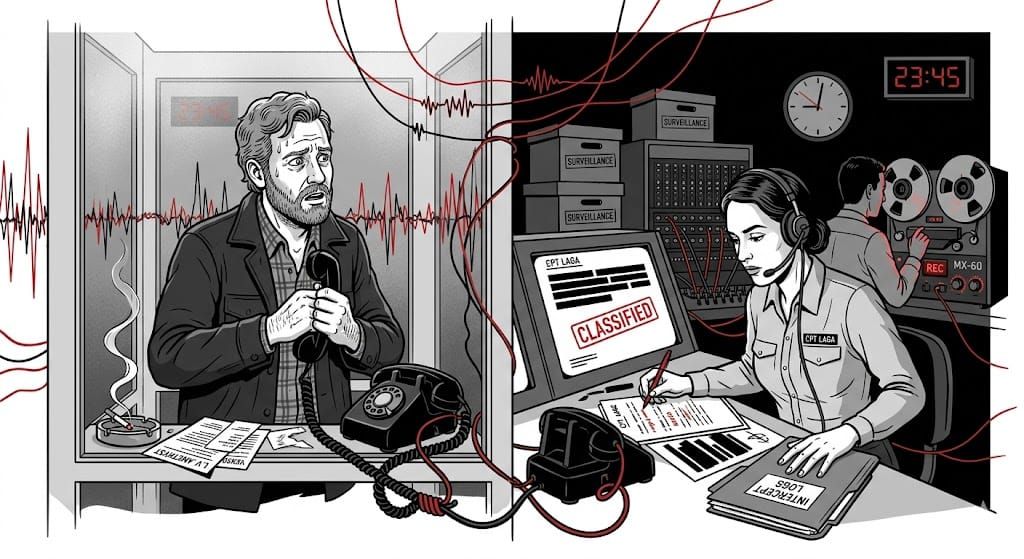
On September 27, 1963, Lee Harvey Oswald walked into the Soviet Embassy in Mexico City and asked to speak to the Consul. He was turned away. Later that afternoon, a woman at the Cuban Consulate named Silvia Duran called the Soviet Embassy about an American who wanted visas to travel to Russia through Cuba. The American, she explained, said he had been to the Soviet Embassy and claimed there were no more problems. The two embassies could not resolve the situation. The American was told it would take four to five months to process his visa. He would have to wait.
The CIA was recording every one of these phone calls.
The transcripts of those intercepted conversations, translated from Spanish by U.S. Embassy personnel in Mexico City, were read by Warren Commission lawyer W. David Slawson on April 13, 1964, at the American Embassy. He took careful notes and drafted a TOP SECRET memorandum for the record on April 21, 1964. That memo is what this document contains. It is a direct window into the Mexico City phone conversations of Lee Harvey Oswald, seven weeks before the assassination of President Kennedy.
What the Document Is
Doc ID 32107690 is an eleven-page packet centered on a TOP SECRET Warren Commission draft memorandum written by W. David Slawson, staff counsel to the Warren Commission, dated April 21, 1964. The memo is titled 'Intercepts from the Soviet and Cuban Embassies in Mexico City' and was written as Slawson's contemporaneous notes from reading the actual intercept transcripts at the U.S. Embassy in Mexico City on April 13, 1964.
The document was originally classified TOP SECRET, was subsequently downgraded to SECRET per a CIA letter to the National Archives dated November 26, 1975, and was incorporated into Oswald's CIA 201 file. A CIA administrative note in the packet explains that while the document belongs to the National Archives as part of the Warren Commission records, it was incorporated into the Oswald CIA file because it may contain CIA information or data. It was released in full by the CIA Historical Review Program in 1996.
The packet includes the administrative identification forms, a CIA note explaining the document's custodial status, a note confirming CIA had no objection to declassification, and the five-page Slawson memo itself containing the intercept summaries and verbatim quotes. The intercepts cover five separate calls across four days: September 27, 1963 at 10:37 a.m.; September 27 at 4:05 p.m.; September 27 at 4:25 p.m.; September 27 at 4:26 p.m.; September 28 at 11:51 a.m.; and October 1 at 10:30 a.m. and 11:30 a.m.
The Intercepts: Call by Call
- September 27, 10:37 a.m.: Oswald Calls the Soviet Embassy
A person described as sounding like an American speaking poor Spanish, later identified as Lee Harvey Oswald, telephones the Soviet Embassy. The conversation is brief. Oswald asks to speak to the Consul. The inside voice tells him the Consul is not in. Oswald says he needs some visas in order to go to Odessa. He is told to call back at 11:30. He asks until when, and the line goes dead.
This is the opening move in a multi-day effort by Oswald to obtain travel documentation. He is asking for visas, specifying Odessa by name, a city in what is now Ukraine that was then part of the Soviet Union. The Soviet Consul is not available. He is told to call back.
- September 27, 4:05 p.m.: Silvia Duran Calls the Soviet Embassy
A woman's voice speaking in Spanish, later identified as Silvia Duran of the Cuban Consulate, calls the Soviet Embassy. She explains that an American has come to the Cuban Consulate requesting an in-transit visa because he is going to Russia. She tells the Soviet Embassy she sent him there first, thinking that if he obtained a Russian visa she could then issue him a Cuban visa without further processing. She asks who he spoke to at the Russian Embassy and notes that he claims he was told there were no more problems.
The inside voice at the Soviet Embassy puts her on hold, explains to someone else that Silvia Duran is calling about an American who says he has previously been to the Soviet Embassy, and then a second inside voice tells Duran to leave her name and number and they will call back. Duran does so, and the call ends with a brief personal exchange about her recently changed apartment address.
This call is significant for several reasons. First, it establishes that Oswald was at the Cuban Consulate in person and had already claimed to the Cubans that the Soviet visa process was progressing. Second, Silvia Duran is personally handling his case and calling the Soviet Embassy on his behalf. Third, the Soviet Embassy's internal exchange, overheard on the intercept, shows the embassy treating the inquiry as a standard consular matter and not an intelligence contact. Fourth, Duran's casual chat about her new apartment address at the end of the call is the kind of incidental detail that tells investigators they are listening to a real conversation, not a staged one.
- September 27, 4:25 p.m.: Soviet Embassy Calls Cuban Embassy
Someone at the Soviet Embassy telephones the Cuban Embassy to ask for the number of the Cuban Consul. The Cuban Embassy gives the number as 11-28-47. This is a routine follow-up call, one minute long, establishing a direct telephone link between the two embassies in connection with Oswald's visa request.
- September 27, 4:26 p.m.: Soviet Embassy Calls Cuban Consulate, Oswald is Present
One minute after the previous call, someone at the Soviet Embassy telephones the Cuban Consulate directly. Silvia Duran answers. The Soviet Embassy representative confirms the American is there, and then reads back from a letter Oswald apparently showed the Consulate: he wants to go to Russia to stay for a long time with his wife who is Russian. The Soviet representative says Washington has received no answer yet and it will probably take four to five months. He states they cannot give a visa there without asking Washington. The Soviet representative also notes: he says he belongs to a pro-Cuban organization and the Cubans cannot give him a visa without his first getting a Russian visa. I do not know what to do with him. I have to wait for an answer from Washington.
Duran explains to the Soviet representative that they too have to wait because Oswald knows no one in Cuba and therefore it is difficult to give him a visa. She notes he said he knew it would take a long time to process the Soviet visa but hoped to await that in Cuba.
The Soviet representative then tells Duran that if Oswald's wife is now in Washington she will receive the visa for return to Russia, but she does not yet have it. Duran replies that naturally they cannot give Oswald a Cuban visa because they do not know if his Russian visa will be approved. The Soviet representative says they can issue a visa only according to instructions, cannot give a letter of recommendation because they do not know him, and apologizes for the inconvenience. Duran thanks him.
This is the most substantive of the intercepted calls. It establishes several facts with precision. Oswald had a letter, apparently from a Soviet consulate in Washington, describing his situation. He had a Russian wife, Marina, who was in Washington and was awaiting a return visa to the Soviet Union. The Soviet Embassy in Mexico City was deferring to Washington on his case. Oswald had identified himself to the Cuban Consulate as a member of a pro-Cuban organization. Both embassies were treating his application as procedurally stuck, not as a priority case or an intelligence matter.
- September 28, 11:51 a.m.: Silvia Duran Calls the Russian Consulate, Oswald Is at Her Side
The following morning, someone at the Cuban Consulate, later identified as Silvia Duran, telephones the Russian Consulate. Duran tells the Russian Consulate that an American is there who says he has been to the Russian Consulate. While waiting for the Russian Consulate to respond, Duran is heard speaking in English to someone apparently sitting at her side. The intercepted conversation goes as follows:
DURAN: He said, wait. Do you speak Russian?
[UNIDENTIFIED VOICE]: Yes.
DURAN: Why don't you speak to him then?
[UNIDENTIFIED VOICE]: I don't know ...
The person sitting at Silvia Duran's side, who admitted to speaking some Russian, then gets on the line with the Russian Consulate and speaks what the intercept describes as terrible, hardly recognizable Russian. This person was later identified as Lee Harvey Oswald.
OSWALD: I was in your Embassy and spoke to your Consul.
RUSSIAN EMBASSY: What else do you want?
OSWALD: I was just now at your Embassy and they took my address.
RUSSIAN EMBASSY: I know that.
OSWALD: I did not know it then. I went to the Cuban Embassy to ask them for my address, because they have it.
RUSSIAN EMBASSY: Why don't you come by and leave it then, we're not far.
OSWALD: Well, I'll be there right away.
This is the only call in the transcript in which Oswald is heard speaking directly in what the intercept identifies as Russian. The description, terrible, hardly recognizable Russian, is a precise detail. Oswald had lived in the Soviet Union for approximately two and a half years before returning to the United States in 1962. His spoken Russian was apparently badly degraded or never fluent in the first place. He is confused about his own address, saying he went to the Cuban Embassy to get it from them because they had it on file. The Russian Consulate dismisses him curtly, and Oswald says he will come right over.
- October 1, 10:30 a.m. and 11:30 a.m.: Oswald Follows Up
On October 1, four days after his initial contact, a person later identified as Oswald speaking in broken Russian telephones the Soviet Embassy. He tells them he was there last Saturday, spoke to their Consul, and was told a telegram would be sent to Washington. He asks if there is anything new. The Soviet Embassy tells him to call another number. He does.
In the 11:30 a.m. call, Oswald speaks to a man identified in the transcript as Obye dkov. Oswald identifies himself by name, says he was at their office last Saturday and spoke to their Consul, and asks whether anything has been received from Washington yet. He cannot remember the Consul's name. The Soviet representative asks if the Consul is dark. Oswald confirms: Kostikov. He is dark. The representative checks and reports that a request has been sent out but nothing has been received yet. As Oswald asks what the next step is, the representative hangs up.
This final call contains a name that became one of the most significant and contested details in the entire Mexico City investigation: Valery Kostikov. Kostikov was a KGB officer assigned to the Soviet Embassy in Mexico City under diplomatic cover. He was known to CIA counterintelligence as an officer working in Department 13 of the KGB's First Chief Directorate, the department responsible for sabotage and assassination operations. The identification of Kostikov as the Soviet official Oswald met with in Mexico City was one of the facts that caused the greatest alarm inside the CIA and the FBI in the immediate aftermath of the assassination.
What the Document Architecture Tells Us
The bureaucratic history of this document is as significant as its content. It was drafted on April 21, 1964 by Slawson from notes he took on April 13, 1964 at the U.S. Embassy in Mexico City. He was not given the transcripts to take away. He could only take handwritten notes while reading them in place, and he quotes verbatim only where the meaning was obscure or the importance was high enough to warrant exact language.
The document was originally classified TOP SECRET. It was downgraded to SECRET in November 1975 via a CIA letter to the National Archives. A CIA administrative note in the packet, undated but written after the downgrade, instructs that the document belongs to the National Archives as part of the Warren Commission records, that the CIA should not concern itself with public requests for it, and that it was incorporated into Oswald's 201 file because it may contain CIA information or data concerning CIA.
The incorporation of this document into Oswald's 201 file is an important administrative fact. A 201 file is the CIA's standard format for dossiers on persons of intelligence interest. The CIA maintained a 201 file on Oswald. The fact that the Warren Commission's intercept summary was folded into that file means that the CIA was treating this document not merely as a Warren Commission record but as part of its own ongoing dossier on Oswald.
The CIA's June 1996 release note confirms no objection to declassification and also contains a handwritten notation reading: We have deleted the record 104-10010-10249. The document was processed under 104-10010-10248, copy of ID and attached. The CIA Historical Review Program stamp on the facing page reads Release in Full 1996. The document thus has a complicated custodial history: it was simultaneously a Warren Commission record and a CIA file record, processed under two different record numbers, and the primary record number was deleted while the document itself was released under the companion number.
The Kostikov Problem
The final call's identification of Valery Kostikov as the Soviet official Oswald met with is the detail in this document that carries the most long-term investigative weight. Kostikov was not a routine consular officer. CIA counterintelligence had identified him as connected to Department 13, the KGB unit responsible for assassination and sabotage abroad. When the CIA learned after the assassination that Oswald had met with Kostikov in Mexico City, that information produced immediate concern at the highest levels of the U.S. government.
The identification appears here casually, embedded in a routine follow-up call. Oswald cannot remember the name of the Consul he met. The Soviet representative asks if the Consul is dark. Oswald confirms, and the name Kostikov is supplied by the Soviet representative, not volunteered by Oswald. That small exchange, overheard by the CIA's intercept operation, became one of the facts that President Johnson and Director Hoover discussed in the immediate aftermath of the assassination when deciding how to structure the Warren Commission.
Johnson reportedly told Senator Richard Russell that he had been informed the investigation could lead to nuclear war if it pointed to Soviet involvement through a known KGB assassination officer. The Kostikov identification in the Mexico City intercepts is the specific intelligence that generated that concern. This document contains the source record of that identification.
Silvia Duran and What the Intercepts Show
Silvia Duran was a Mexican citizen employed at the Cuban Consulate in Mexico City. She appears in four of the seven intercepted calls documented in this memo, handling Oswald's visa case personally, calling the Soviet Embassy on his behalf, putting him on the phone with the Russian Consulate, and managing the back-and-forth between the two embassies over the course of multiple days.
The intercepts show Duran doing routine consular work. She is processing a difficult visa application for someone she knows no one in Cuba and whose Russian visa approval is uncertain. She is professional, cooperative with the Soviet Embassy, and evidently familiar with them given the ease of the communication. The personal exchange about her apartment address at the end of the September 27 afternoon call is consistent with a consular officer who has regular contact with the Soviet Embassy.
After the assassination, the Mexican government arrested Duran and interrogated her about her contact with Oswald. She was rearrested and interrogated a second time. The CIA requested the Mexican government conduct those interrogations. Her account of her contact with Oswald was consistent with what the intercepts show: she processed his visa application, found it procedurally impossible to complete without a Soviet visa approval, and had no further contact with him after his Mexico City visit.
The Warren Commission received the intercept summaries in this document but not the original recordings or complete transcripts. Slawson's memo is the Commission's only direct access to the content of those conversations. The CIA declined to provide the recordings themselves.
The Impostor Question
One of the most contested aspects of the Mexico City story is the question of whether the person who visited the Soviet and Cuban Embassies was actually Lee Harvey Oswald or someone impersonating him. The CIA's surveillance photographs from the Soviet Embassy showed a man who physically did not resemble Oswald. That man was identified as Oswald in CIA cables sent before the assassination. The discrepancy was never satisfactorily resolved.
This document, in the context of that question, is complicated evidence. The intercepts document phone calls. They cannot confirm who was physically present at the embassies. Slawson's memo notes that the voices in the calls were later identified as Oswald and Duran, but the basis for those identifications is not stated in the memo. The voice described as speaking terrible, hardly recognizable Russian in the September 28 call is identified as Oswald, but the intercept predates any voice comparison.
What the intercepts do establish is that whoever was making these calls had specific knowledge of Oswald's personal situation: his Russian wife, her Washington address, the letter from the Washington Soviet consulate, his self-identification as a member of a pro-Cuban organization, and his stated plan to await the Soviet visa in Cuba. Whether that person was Oswald or an impostor with detailed knowledge of Oswald's circumstances is a question this document raises but cannot resolve by itself.
How It Fits the Bigger Picture
In the previous entry in this series, the Hoch research memo from 1975, Paul Hoch documented that an FBI report on Oswald in Mexico strongly suggested the CIA intercepted at least two phone calls between the Cuban and Russian Embassies in which Oswald was discussed, and that during one call Oswald was apparently on the phone himself. He further noted that the CIA declined to tell him whether any such recorded conversations existed. This document is those transcripts, or rather the closest public access record to them: Slawson's contemporaneous notes from reading the originals.
The NSA documents examined earlier in this series showed the Senate Select Committee asking the NSA in 1976 whether it had received Soviet Embassy Mexico City communications for November or December 1963 and what analysis it had conducted. The NSA said it could not confirm or deny and that the people who would know had retired. This document establishes that intercepts from September and October 1963, covering the specific period of Oswald's Mexico City visit, did exist, were read by Warren Commission staff in 1964, and were incorporated into the CIA's own Oswald file.
The Artime Army intelligence report from November 1963, earlier in this series, showed the anti-Castro exile world actively recruiting from U.S. military programs three weeks before the assassination. The Mexico City intercepts show Oswald, or someone identifying as him, in contact with both the Soviet and Cuban diplomatic missions seven weeks before Dallas, claiming membership in a pro-Cuban organization, trying to travel to Cuba and Russia, and speaking to a Soviet official whose CIA counterintelligence profile connected him to the KGB's assassination and sabotage directorate.
These pieces do not assemble into a tidy conclusion. They assemble into a precise set of documented facts: Oswald was in Mexico City in late September 1963. The CIA intercepted his phone calls. Those calls were read by Warren Commission staff. The Commission's staff counsel took notes but could not take the transcripts. The CIA kept its own copy in Oswald's 201 file. The recordings were never provided to the Commission. The man photographed at the Soviet Embassy during Oswald's visit did not physically resemble Oswald and was never identified.
The Bottom Line
Doc ID 32107690 contains the closest thing to a verbatim record of Lee Harvey Oswald in the weeks before the assassination that exists in the publicly available JFK files. It is Warren Commission lawyer W. David Slawson's handwritten notes from reading CIA intercept transcripts of phone calls made from Mexico City in late September and early October 1963.
Oswald is heard asking for visas, identifying himself as a member of a pro-Cuban organization, speaking terrible Russian with the Soviet Consulate, and following up persistently over four days. Silvia Duran of the Cuban Consulate is heard coordinating with the Soviet Embassy on his behalf. And in the final call, Oswald inadvertently identifies Valery Kostikov as the Soviet official he met, a name that would become one of the most alarming intelligence facts in the assassination investigation once Kennedy was dead.
This document was classified TOP SECRET for over thirty years. It was folded into the CIA's own Oswald dossier. Slawson could read the transcripts but not take them. The recordings were never given to the Commission. Those choices, made in 1964, are part of the record too.
Subscribe to our newsletter
Subscribe to our newsletter to get the latest updates and news






Member discussion