
The Architect of the Watch List

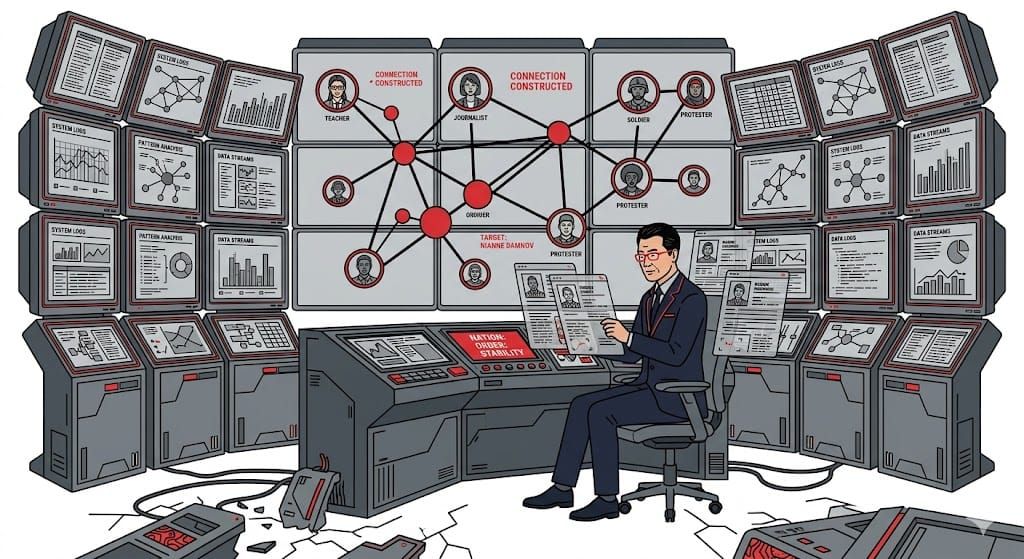
This document is an Interview and Meeting Summary from the Church Committee (Senate Select Committee to Study Governmental Operations with Respect to Intelligence Activities). Dated September 9, 1975, it records the testimony of Juanita Moody, a powerhouse within the National Security Agency (NSA) who ran the groups responsible for signals intelligence (SIGINT) during the most volatile years of the 1960s and 70s.
This matters because it provides a rare, high-level look at how the NSA pivoted from tracking foreign threats to monitoring American citizens. Moody admits the 1963 assassination of John Kennedy was the "impetus" for the Secret Service to start putting names of U.S. citizens on the NSA "watch list".
The Core: Facts, Names, and Dates
- The Subject: Juanita Moody. Her resume is a map of the intelligence state: clerk in 1943, cryptanalyst in WWII, head of G Group (non-Communist countries) by 1961, and eventually head of V Group by 1973, overseeing research, engineering, and the National SIGINT Operations Center (NSOC).
- The Watch List: It started in 1961 with "subversives and agents" from the CIA. After 1963, it expanded to U.S. citizens who supposedly posed threats to government officials.
- Project MINARET: This was the formalized version of the domestic watch list. Moody claims the secrecy, what she calls "protecting the need to know," was about the "perishable nature" of SIGINT.
- The Scale: At its peak, the list had about 1,100 names of U.S. citizens and groups, with roughly 300 active at any one time.
- The Players: Names that surface include General Carter (Director), Gayler (who got daily "specially colored folders" on the watch list), and Colonel William Hamilton. Moody also notes the Huston Plan involvement of characters named Buffham and someone redacted from her shop.
Red Flags and Black Holes
The gaps in this testimony are wide enough to drive a surveillance van through.
First, the legality question is treated like a footnote. Moody admits that Colonel Hamilton questioned the "legality and propriety" of tracking antiwar groups as early as 1967. Yet, she claims she doesn't recall any actual questioning of the operation’s legality during that entire mid-to-late 60s period.
Second, there is the issue of the Yarborough Cable from October 1967. This was the explicit trigger to target "black and antiwar movements". Moody says she initialed the response to this cable in June 1969 but "could not recall why" she initialed it so late. Even weirder: she claims she never talked to Yarborough and couldn't recall anything being included on the watch list directly because of his telegram, despite it being a foundational document for the expansion of domestic spying.
Third, and most damning for an investigation, is the destruction of files. Moody admits she helped decide to destroy watch list files in January 1974. She claims they just didn't need to keep things for more than five years. The timing is incredibly convenient, occurring just as the post-Watergate "atmosphere" was making the intelligence community sweat.
The Analysis
Moody’s defense is a classic "just following orders" mixed with "we were protecting the sources." She insists the NSA "does not have any law enforcement function" while simultaneously admitting they intercepted domestic communications that could be used for law enforcement, like drug trafficking.
The most chilling part is the mention of the Huston Plan. Moody admits there was a proposal to change the NSA charter so they could "target domestic citizens without having to worry about the foreign communications caveat". She says if told to do it, they would "carry out what we were told to do".
Next Steps and Implications
The investigation needs to look at the "specially colored folders" Moody delivered to Gayler daily. If those logs exist, they map exactly who was being watched. The destruction of files in January 1974 needs a deeper dive, who else authorized that "housecleaning"? We need to cross-reference the 1,100 names on that watch list with the Church Committee's final findings to see how many were actually "threats" versus political dissidents. The "perishable nature" of the intel was likely a convenient excuse to burn the evidence of illegal domestic spying.
Subscribe to our newsletter
Subscribe to our newsletter to get the latest updates and news






Member discussion