
The Clerk at 544 Camp Street


The humidity in New Orleans usually clung to everything, but in August 1963, it felt particularly heavy in the FBI offices. Special Agent Guy Banister sat behind a desk cluttered with anti-Communist tracts and surveillance logs, his eyes tracking a young man on the sidewalk below.
Lee Harvey Oswald was making a scene again. He was thin, defiant, and clutching a stack of "Fair Play for Cuba" handbills. He looked like a revolutionary, but he was standing on the wrong corner for a Communist.
The handbills in Oswald’s grip were stamped with an address: 544 Camp Street.
Across the street, through a different set of blinds, the intelligence community's gaze was just as fixed. They knew 544 Camp Street well. It was the Newman Building. It wasn't just a place for disgruntled ex-Marines to hand out flyers; it was the same building that housed the Cuban Revolutionary Council, a front the CIA had breathed life into for the Bay of Pigs.
The two worlds weren't supposed to touch. One was a lone Marxist agitator; the other was a multi-million-dollar covert operation. Yet, there was Oswald, standing in the middle of the overlap.
When the shots rang out in Dallas months later, the machinery of the Bureau and the Agency didn't just start investigating; they started editing.
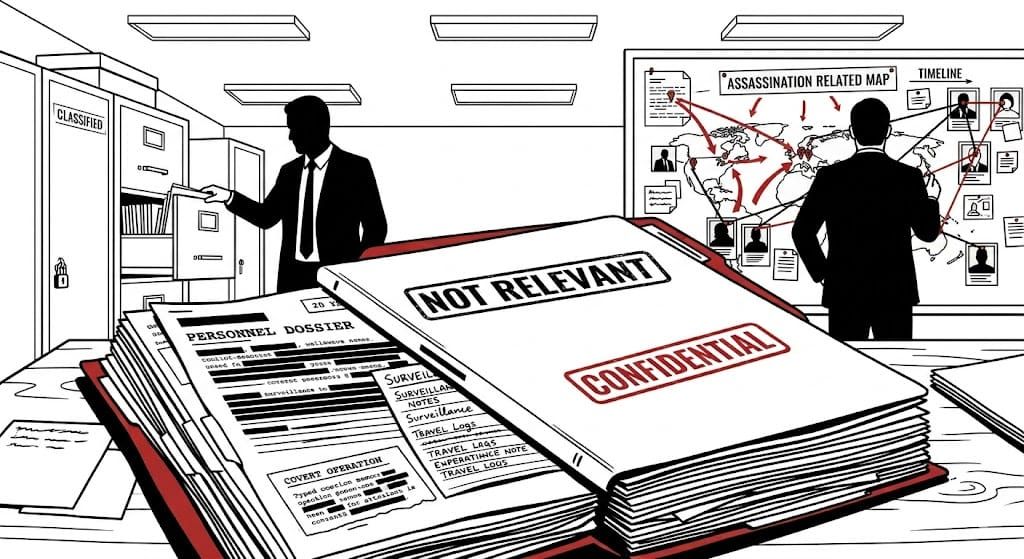
The field reports began to undergo a subtle, surgical transformation. In the official transcripts prepared for the Warren Commission, the address on Oswald's handbills was suddenly listed as 531 Lafayette Street. It was the same building, but a different door, a side entrance that led away from the revolutionary offices and toward a quiet side street.
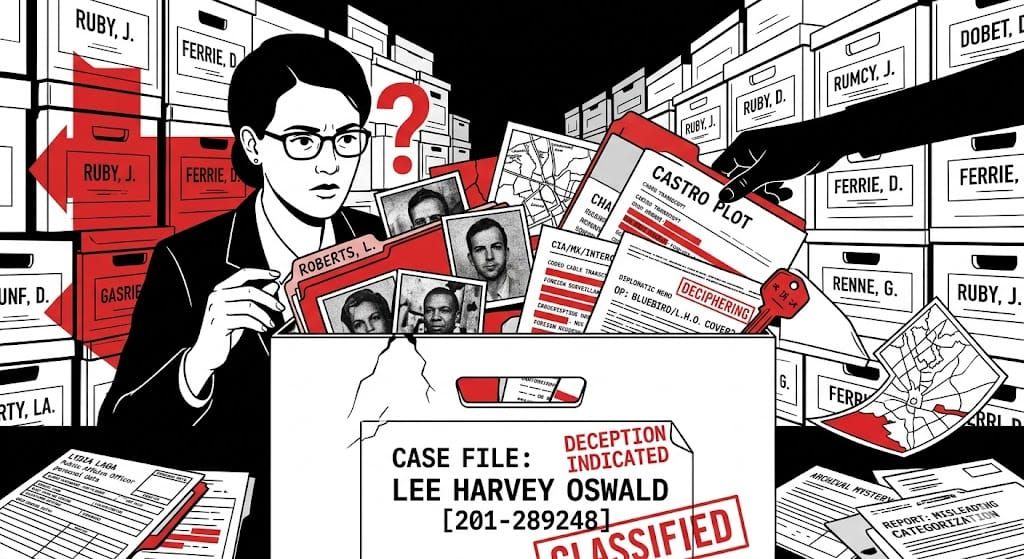
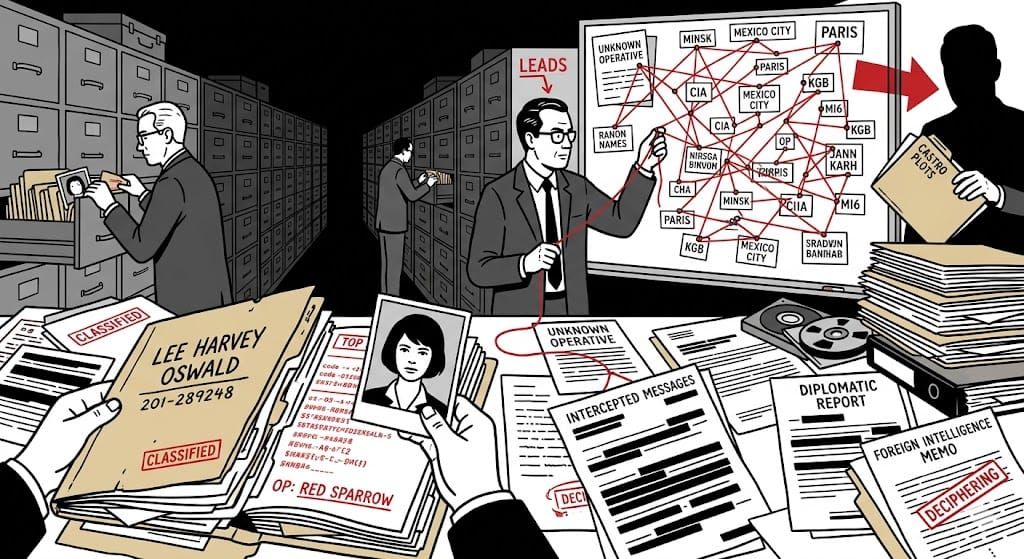
Back in Washington, a clerk pulled Record Number 104-10196-10027 from a secure cabinet. The memorandum from the CIA was blunt: they told the FBI they had "nothing" on Oswald except what the Bureau had already provided.
It was a clean, professional lie.
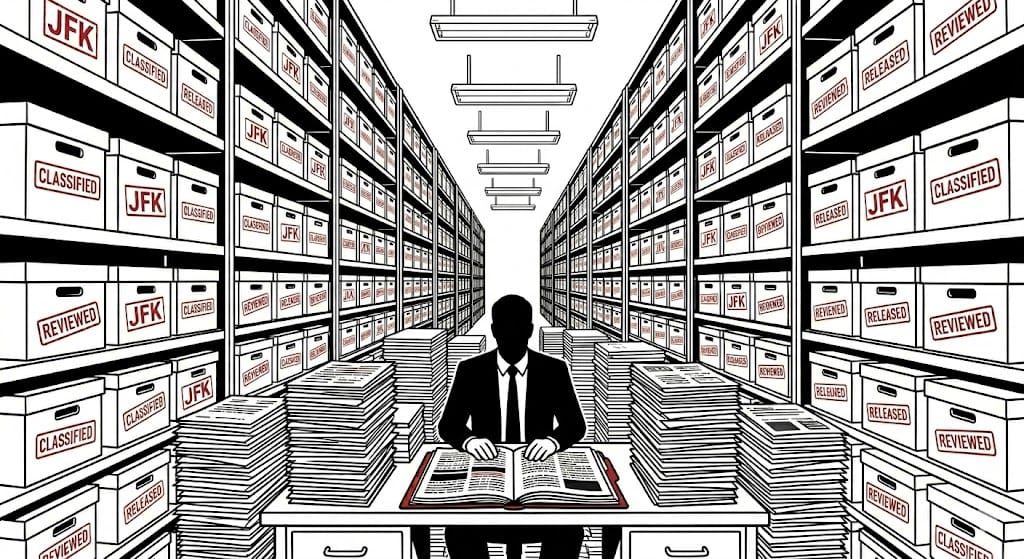
As the investigators flipped through CD 692, they found only summaries, refined, polished paragraphs that stripped away the raw cables from Mexico City. The photographs of a man the Agency claimed was Oswald, a man who looked nothing like the body in the Dallas morgue, were filed away in the dark.
The truth wasn't being destroyed; it was being reorganized. By the time the Commission asked for the files, the man at 544 Camp Street had been scrubbed from the record, leaving only a ghost on a sidewalk that, officially, he had never stepped on.
Subscribe to our newsletter
Subscribe to our newsletter to get the latest updates and news






Member discussion