
The Scotland Intercept: Ghost in the Machine

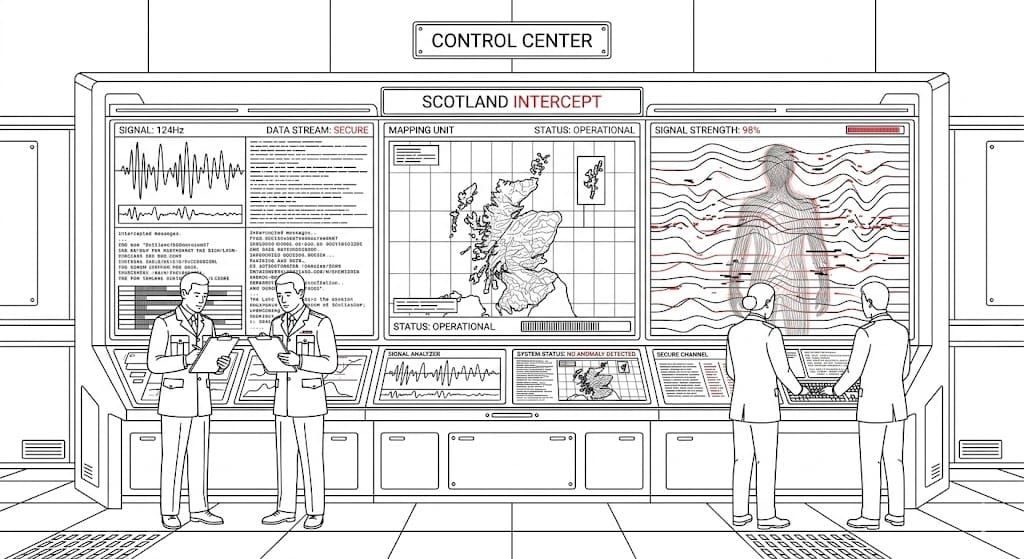
This document is a National Security Agency (NSA) Memorandum for the Record, dated December 13, 1978. It matters because it confirms the existence of a high-level search for a specific, intercepted message regarding a potential assassination attempt on President Kennedy, a message allegedly caught by a listening post in Scotland.
If the message existed, it would blow the "lone gunman" theory out of the water and point directly to prior knowledge within the intelligence community.
The Core: Facts, Names, and Dates
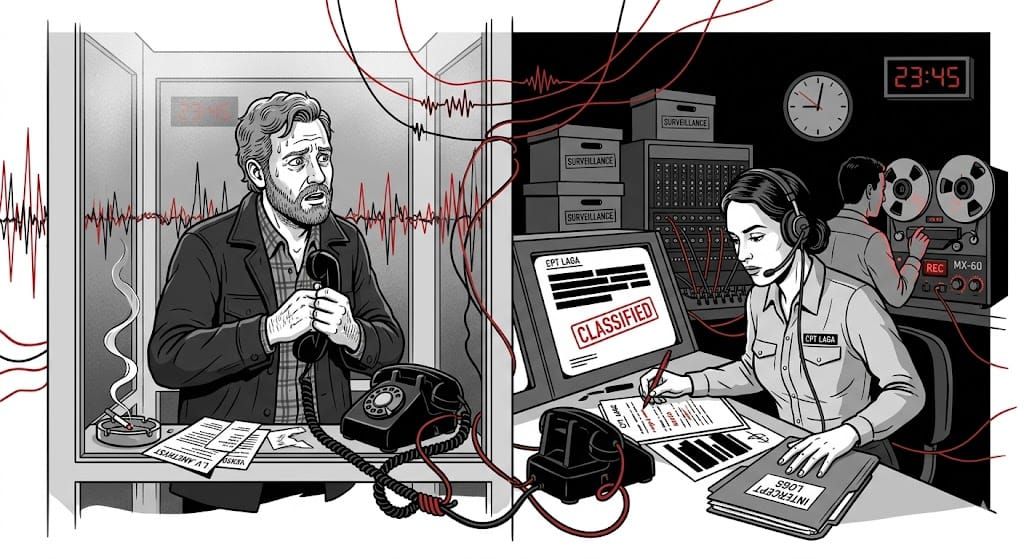
- The Lead: A former Air Force sergeant claimed that traffic intercepted at USA-55 (Kirknewton, Scotland) in 1963 was forwarded to the NSA. This traffic reportedly contained information about a possible assassination plot against Kennedy.
- The Searchers: The memo tracks a scramble between high-level NSA officials: Eugene Yeates (Chief, Legislative Affairs), Edwin Sapp, Don Wigglesworth (Agency Records Officer), and Carrol Baldwin.
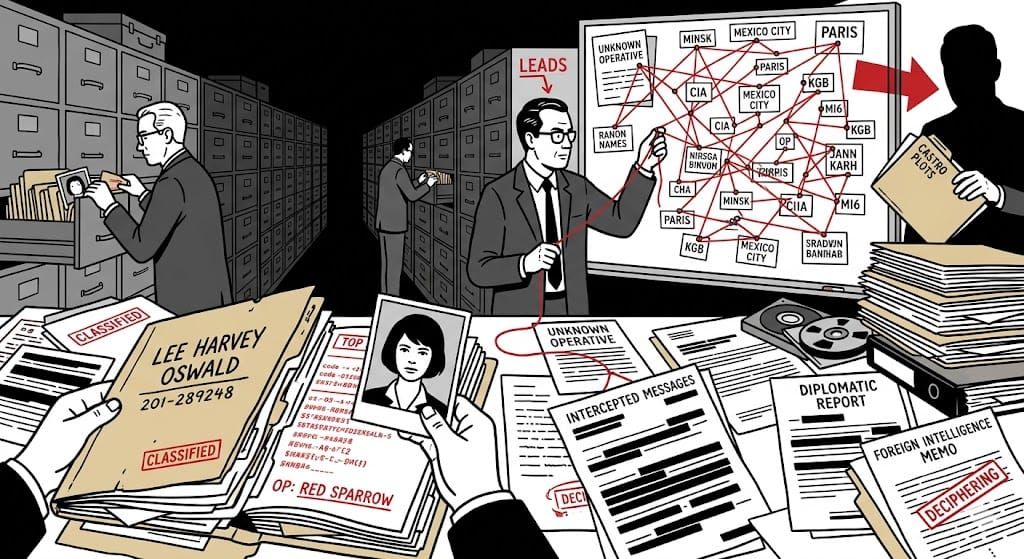
- The Location: The search focused on B1 Stored Records, the predecessor to the G8 group, which would have received traffic from Scotland in 1963.
- The Findings: Analysts reviewed three "unidentified" boxes of 1963 files. They reported finding no files referring to President Kennedy and noted the latest date in those boxes was actually 1962.
Red Flags and Black Holes
The "reasonable effort" described in this memo is riddled with institutional gaps.
First, the record-keeping is a mess. The agency searched boxes labeled "1963 files," only to find they contained primarily material from 1961 and 1962. When Edwin Sapp requested a follow-up search of 1964 materials to see whether the 1963 files were misfiled, Jack Butler told him that nothing on the list "merits such a search." This is a flat refusal to follow a logical lead.
Second, the memo explicitly states that "Retired Records Storage" was ruled out because intercept traffic is not kept for long-term or permanent retention. This creates a massive "black hole" where the most sensitive intelligence, actual intercepts, is systematically destroyed or "not retained," making a forensic investigation decades later nearly impossible.
Finally, the entire search was triggered by a specific claim from a sergeant who recalled the intercept. Instead of interviewing the sergeant to obtain more technical details, such as specific frequencies or times, the NSA performed a cursory box check and then closed the door.
The Analysis
This is a defensive legal maneuver disguised as an administrative search. The NSA was checking a box for the House Select Committee on Assassinations (HSCA). By labeling the search as "reasonable," they created a legal shield against further inquiry.
The fact that the NSA even took the claim seriously enough to involve the Chief of Legislative Affairs suggests the sergeant's claim had some initial credibility. However, the investigation shows a pattern of "not found" results that rely on the agency's own poor filing systems as a justification for stopping the search.
Next Steps and Implications
The investigation must find the name of that former Air Force sergeant. If he is still alive, his technical description of the Kirknewton intercept is more valuable than any "unidentified box" at the NSA. We also need to look for the "B1 Stored Records Listing" mentioned in the memo to see what other "unidentified" boxes were conveniently left out of the search. The refusal to search the 1964 files needs to be challenged; it is the most likely place for a late 1963 intercept to have ended up.
Subscribe to our newsletter
Subscribe to our newsletter to get the latest updates and news







Member discussion