

members only
The World Just Never Made Room for Me
There is a particular kind of grief that no one names. It is not the grief of losing a person, or a home, or a season of your life. It is the grief of watching a dream survive every obstacle you throw at it, every disappointment, every rejection, and still not winning. That is the grief of being a writer who was made to write but has never been given the world's permission to be read.
I know that grief the way I know my own handwriting.
Growing up in Haiti, inside a French-based educational system that took literature seriously in ways most American schools never have, I made a choice that felt less like a decision and more like a reckoning. When the time came to choose my academic path, I went straight to literature without hesitation. Math was fine. Science was fine. But literature was mine. It was the only subject that felt like it was waiting for me, not the other way around.
And this was not some soft, forgettable curriculum. The Haitian system pushed us into specialization early. University there does not waste your time with general education. By the time you reach your final year of high school, you are already doing the intellectual work that American students do in their first years of college. I was dissecting texts, tracing themes across centuries, writing and rewriting until the words said exactly what I meant. For most of my classmates, it was a grind. For me, it was the closest thing to joy I had ever felt inside a classroom.
Because I already knew what books could do. I knew it the way you know something before anyone teaches it to you. Books were not just stories. They were worlds, fully lit and fully breathing, filled with emotions so precise they named feelings I had never had words for. That was what I wanted to make. Not just sentences. Worlds. Feelings that had not been named yet.
I was nearly alone in that love. In my school, the literature section was almost empty. Writing was not something young people in my community chased. It was not glamorous, not practical, not the kind of thing that made parents feel secure at night. I did not care. I kept writing anyway, quietly, the way you keep a secret that belongs only to you.
When I came to the United States, I carried that secret with me.
And then something strange happened. The country I moved to, the country where I imagined writers were everywhere, turned out to be full of people who wanted to become writers without particularly loving writing. Suddenly everyone had a book in them. Everyone had a story they were sure the world needed. And maybe they were right. But there is a difference between having a story and being called by the act of storytelling itself. A difference between writing because you cannot stop and writing because you want the word author attached to your name.
I started reading what was selling. I figured if I was going to compete, I should understand the competition. So I read the bestsellers. The books people were pressing into each other's hands, the ones dominating social media, the ones being turned into streaming series. And I sat with a quiet, uncomfortable feeling I did not know how to talk about out loud.
The feeling was this: I have written better than this.
Not arrogance. Something more painful than arrogance. Because arrogance comes with confidence. What I felt came with confusion. If these stories, recycled and thinly disguised, dressed in contemporary language but carrying the bones of a hundred stories told before them, if these were the ones getting through, then what did it mean that mine were not?
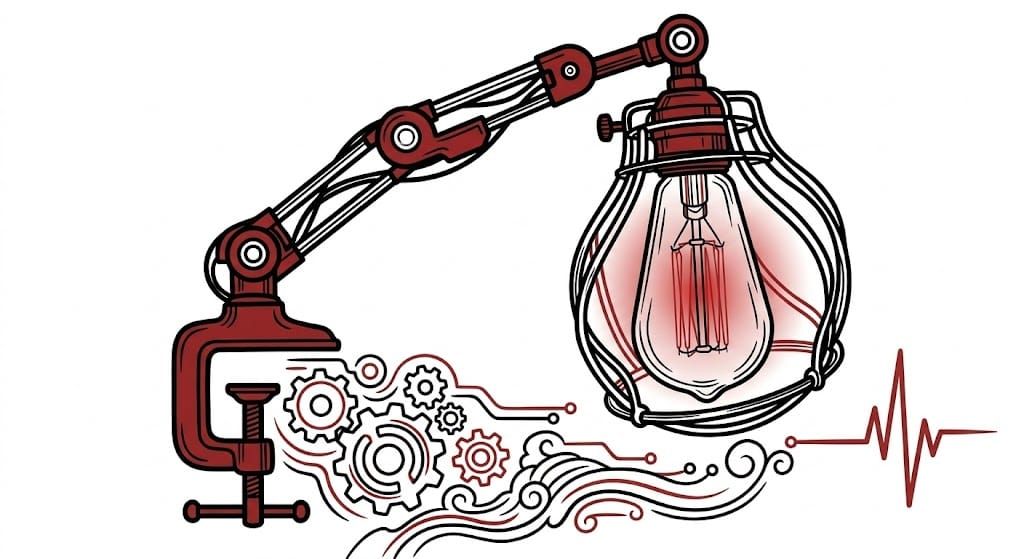
My ideas do not come from sitting at a desk and trying to force something onto a page. They never have. They come while I am driving, while I am in the middle of a conversation about something else entirely, while I am on the edge of sleep and the world goes quiet. They arrive whole, urgent, demanding. I do not chase them. They chase me. And I have spent years believing that this, this electric, involuntary relationship with story, meant something. Meant I was supposed to do this.
But passion, I have learned, does not open doors. Access does.
Success in writing has less to do with the quality of what you make than with who you know, what resources you have, what platform you are starting from, and whether the algorithm happens to be in your favor on the right day. A brilliant, original story with no audience and no marketing budget will lose to a mediocre story with a built-in fan base almost every time. Not because readers are foolish. Because readers can only find what they can see.
And I am still learning how to be seen.
Building an audience has been the hardest thing I have ever attempted. People share their secrets, their frameworks, their tips and systems, but they rarely work for someone starting from nothing, from outside the existing networks, without the cultural capital that so many take for granted. I have tried. I keep trying. And I will not pretend the frustration does not live in my chest like something heavy.
Then there is the publishing world itself, and what it has become.
Amazon KDP changed everything and not entirely for the better. It opened the door so wide that the room got very, very crowded. Anyone can publish now, and many do, some beautifully, many carelessly, and the noise makes it nearly impossible for readers to find the signal. I do not fault the tool. I fault what happens when a tool removes all friction: quality becomes indistinguishable from volume.
And then there are the vanity publishers. I want to name them for what they are, because I have watched them prey on writers who deserve better. They find your manuscript. They send you a glowing letter. For a moment, your heart does something it has not done in months. You think: finally. Someone sees it. But buried in the contract, past the excitement, past the language that sounds like belief in your work, is the number. Six thousand dollars. Ten thousand dollars. More.
Traditional publishers do not ask you for money. They invest in you. They take a risk on you. These vanity operations take the shape of opportunity while removing everything that makes opportunity real. They are designed to catch you in the moment when your guard is lowest, when hope has made you briefly careless.
I know because I have felt that moment. I know what it costs to find out what it actually is.
So I stepped back. Not from writing. Never from writing. But from the particular battle of traditional and vanity publishing, with all its gatekeepers and expenses and quiet humiliations. I turned instead to blogging, to this more honest, more direct form of reaching people. No contracts. No middlemen. No one deciding whether my voice is commercially viable. Just words and the people willing to read them.
It is a smaller stage. I know that.
But here is what I have had to make peace with, slowly and imperfectly: fame was never really the point. The point was always the writing. The point was always the worlds I could build, the feelings I could name, the reader somewhere who would press these pages to their chest the way I once pressed other writers' pages to mine.
I may never be the writer I imagined as a child in Haiti, the one whose words echo through generations. The literary world is not a fair system, and pretending otherwise is a kindness I can no longer afford myself.
But I am still here. Still writing. Still answering when the ideas arrive at inconvenient hours, still following the story wherever it leads, still believing, even on the hard days, that the work matters.
Not because someone told me it does.
Because I cannot stop.
That is what it means to be a writer.
It always has been.
It always will be.
Subscribe to our newsletter
Subscribe to our newsletter to get the latest updates and news





Member discussion