



members only
Exploring the Enigma of Life After Death: Perspectives, Beliefs, and Mysteries
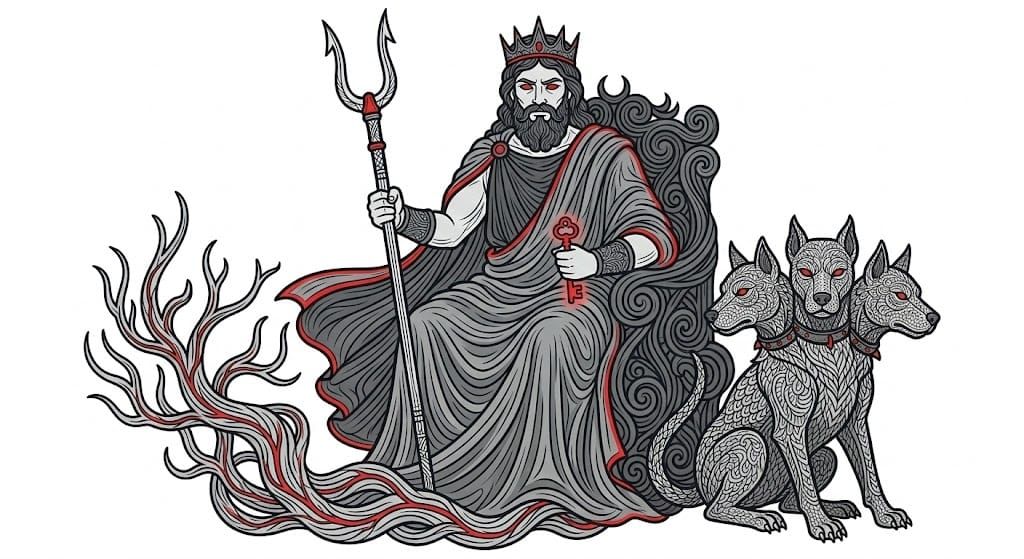
remain unresolvedThe Enigma of Life After Death: Perspectives, Beliefs, and Mysteries
Since the dawn of human civilization, the concept of life after death has occupied a central place in our collective imagination. It appears in the oldest surviving texts, in cave paintings, in burial rites that predate written language by tens of thousands of years. The question is not merely philosophical. It is visceral, personal, and urgent in a way that few other questions can match: What happens when we draw our last breath? Does consciousness dissolve with the body, or does something of us persist, travel, transform?
No question has generated more sustained human thought, and none remains more genuinely open. This essay explores the major frameworks through which human beings have approached the mystery of death, from ancient religious traditions to modern scientific inquiry, and examines what each can and cannot tell us about what, if anything, lies beyond.
Religious and Spiritual Perspectives: The Architecture of the Afterlife
The world's major religious traditions did not arrive at their beliefs about death arbitrarily. Each developed within a specific cultural, historical, and philosophical context, and each offers a coherent internal logic for why death is not the end.
In the Abrahamic traditions, Christianity, Islam, and Judaism, the soul is understood as the animating essence of a person, distinct from the physical body and capable of surviving its dissolution. Christianity, particularly in its Western forms, has historically emphasized a linear journey: one life, one death, and a subsequent judgment that determines the soul's eternal destination. The vision of heaven and hell as moral accounting systems reflects a deep commitment to the idea that human choices carry ultimate weight. Islamic theology shares this framework, with its own detailed eschatology describing the grave, the Day of Judgment, and the gardens of paradise alongside the fire of hell. Judaism, by contrast, has historically been more ambiguous about the afterlife, focusing its theological energy on right conduct in this life, though later traditions developed rich concepts of Olam Ha-Ba, the World to Come.
Eastern religious traditions approach the question from a fundamentally different angle. In Hinduism, the atman, or individual soul, is understood as a fragment of Brahman, the universal consciousness, temporarily housed in a physical form. Death is not an ending but a transition, a shedding of one body before the soul assumes another, guided by karma, the accumulated moral weight of past actions. The ultimate aspiration is moksha, liberation from the cycle of rebirth entirely, a dissolution of individual identity back into the infinite. Buddhism refines and complicates this picture: it rejects the notion of a fixed, permanent self while still affirming that something, a stream of consciousness shaped by karma, continues across lifetimes. The goal of Buddhist practice is nirvana, the extinguishing of craving and ignorance that perpetuates the cycle of suffering and rebirth.
Indigenous and animist traditions around the world offer yet another set of frameworks, many of which emphasize the continuity between the living and the dead as ongoing community members rather than as departed souls in a distant realm. Ancestor veneration, common across African, East Asian, and Native American traditions, reflects a conception of death as a change in status rather than an exit from relationship.
What these traditions share, despite their profound differences, is the conviction that death is not simply an ending. They offer structure and meaning to the most disorienting fact of human existence, and they have provided billions of people, across millennia, with frameworks for grieving, for living ethically, and for facing their own mortality with something other than pure terror.
Near-Death Experiences: Evidence or Artifact?
In recent decades, a body of empirical research has accumulated around a phenomenon that sits uncomfortably between religious experience and medical anomaly: the near-death experience, or NDE. Cardiologist Pim van Lommel conducted one of the most rigorous prospective studies of NDEs, published in The Lancet in 2001, following 344 cardiac arrest patients in the Netherlands over several years. Approximately 18 percent reported some form of NDE, including out-of-body experiences, encounters with deceased relatives, movement through light, and a profound sense of peace and clarity. Crucially, these experiences occurred during periods when the patients had no measurable brain activity.
Physician Raymond Moody, whose 1975 book Life After Life first brought NDEs to widespread public attention, identified a set of recurring features across hundreds of accounts: the sensation of leaving the body, traveling through a dark tunnel, encountering a being of light, a panoramic life review, and a border or boundary that, once crossed, would mean permanent death. The consistency of these features across individuals with no prior contact with each other, and across different cultural backgrounds, has struck many researchers as significant.
Skeptics have proposed a range of physiological explanations. Neurologist Kevin Nelson has argued that NDEs are a form of REM intrusion, a blurring of the boundary between sleep and waking states in the brain under extreme stress. Others have pointed to the role of hypoxia, or oxygen deprivation, in producing hallucinations, or to the release of endogenous neurotransmitters such as dimethyltryptamine under conditions of acute stress. Psychologist Susan Blackmore has proposed that the tunnel-and-light experience reflects the firing patterns of neurons in the visual cortex as they become oxygen-deprived.
These explanations are plausible, but critics note that they do not fully account for the verified out-of-body perceptions reported by some NDE subjects, cases in which patients accurately described events in the operating room, or in distant locations, during periods of clinical death. The AWARE study, led by cardiac surgeon Sam Parnia, sought to systematically test these claims by placing hidden visual targets in operating rooms that would be visible only from above. The results were inconclusive but suggestive, with at least one case producing a verified out-of-body perception that standard neuroscientific explanations struggle to accommodate.
The NDE literature does not prove the existence of an afterlife. But it raises genuinely difficult questions about the relationship between consciousness and the brain that remain unresolved.
Scientific and Philosophical Perspectives: The Hard Problem of Consciousness
Science has made extraordinary progress in mapping the neural correlates of conscious experience. We know a great deal about which brain regions are active during different mental states, how neurotransmitters shape mood and cognition, and how damage to specific areas of the brain produces specific changes in personality and perception. What science has not been able to explain is why any of this produces subjective experience at all.
Philosopher David Chalmers gave this gap a name: the hard problem of consciousness. It is one thing to explain how the brain processes information and generates behavior. It is quite another to explain why there is something it is like to be the entity doing the processing. Why is the processing of light wavelengths experienced as the redness of red? Why does grief feel like grief rather than nothing at all? This question, Chalmers argued, cannot be answered by any amount of further neuroscientific detail, because it concerns the relationship between physical processes and subjective experience, and that relationship remains fundamentally mysterious.
This philosophical difficulty has led some serious scientists and philosophers to consider the possibility that consciousness is not simply produced by the brain but may be a more fundamental feature of reality. Physicist Roger Penrose and anesthesiologist Stuart Hameroff have proposed the Orchestrated Objective Reduction theory, suggesting that quantum processes in the microtubules of neurons may play a role in generating consciousness, and that this consciousness may not be entirely localized in or dependent upon the physical brain. Philosopher Bernardo Kastrup has argued for a form of idealism in which consciousness is the ground of all existence, and what we call the physical world is an appearance within a universal mind.
These positions remain highly controversial and far outside the scientific mainstream. But they illustrate the degree to which the mystery of consciousness creates genuine intellectual space for questions about survival after death, space that a naive materialism forecloses too quickly.
The Psychological Dimension: Why We Need the Question
It is worth pausing to ask why the question of life after death matters so much to us, not just intellectually, but emotionally and existentially. Terror management theory, developed by social psychologists Jeff Greenberg, Sheldon Solomon, and Tom Pyszczynski, proposes that much of human culture, religion, and behavior can be understood as a response to the awareness of mortality. The knowledge that we will die, and the inability to know precisely when or how, generates a level of existential anxiety that, if left unmanaged, would be psychologically overwhelming. Cultural belief systems, including religious afterlife narratives, serve in part as buffers against this anxiety, providing symbolic meaning that extends beyond the individual life.
This does not mean that afterlife beliefs are false because they are psychologically useful. Psychological function and truth value are independent questions. But it does suggest that our approach to the topic should be self-aware. We are not disinterested observers of this question. We are subjects with a profound stake in the answer, and that investment can distort both credulous acceptance and reflexive skepticism.
The question also carries moral and relational weight. How we understand death shapes how we grieve, how we treat the dying, and how we orient ourselves toward our own mortality. Cultures with robust afterlife traditions tend to develop distinctive practices of mourning and commemoration that maintain connection with the dead as ongoing presences rather than simply absences. Whether or not these practices track metaphysical truth, they serve a vital human function.
Conclusion: Living with the Open Question
What happens after we die remains genuinely unknown. The religious traditions of the world offer accounts of extraordinary depth, beauty, and internal consistency, but they disagree profoundly with one another, and none can be verified through ordinary means. The scientific study of consciousness has illuminated the astonishing complexity of the brain while deepening rather than resolving the mystery of what consciousness actually is. Near-death experiences offer tantalizing data points that resist easy explanation in either direction.
What we can say with some confidence is that the question itself is not going away, and that engaging with it seriously, without either rushing to comfortable certainty or dismissing it as unanswerable, is one of the more honest things a person can do. The awareness of death is among the most distinctively human features of our existence. It is the lens through which every other question about meaning, value, and relationship is ultimately focused.
To sit with that awareness, without flinching, is not morbid. It is, in many traditions, the beginning of wisdom.
Works Cited
- Blackmore, Susan. Dying to Live: Near-Death Experiences. Prometheus Books, 1993.
- Chalmers, David J. The Conscious Mind: In Search of a Fundamental Theory. Oxford University Press, 1996.
- Greenberg, Jeff, Sheldon Solomon, and Tom Pyszczynski. "Terror Management Theory of Self-Esteem and Cultural Worldviews: Empirical Assessments and Conceptual Refinements." Advances in Experimental Social Psychology, vol. 29, 1997, pp. 61-139.
- Kastrup, Bernardo. The Idea of the World: A Multi-Disciplinary Argument for the Mental Nature of Reality. IFF Books, 2019.
- Moody, Raymond A. Life After Life: The Investigation of a Phenomenon, Survival of Bodily Death. Mockingbird Books, 1975.
- Nelson, Kevin. The Spiritual Doorway in the Brain: A Neurologist's Search for the God Experience. Dutton, 2011.
- Parnia, Sam, et al. "AWARE: AWAreness during REsuscitation: A Prospective Study." Resuscitation, vol. 85, no. 12, 2014, pp. 1799-1805.
- Penrose, Roger, and Stuart Hameroff. "Consciousness in the Universe: A Review of the 'Orch OR' Theory." Physics of Life Reviews, vol. 11, no. 1, 2014, pp. 39-78.
- Van Lommel, Pim, et al. "Near-Death Experience in Survivors of Cardiac Arrest: A Prospective Study in the Netherlands." The Lancet, vol. 358, no. 9298, 2001, pp. 2039-2045.
- Van Lommel, Pim. Consciousness Beyond Life: The Science of the Near-Death Experience. HarperOne, 2010.
Subscribe to our newsletter
Subscribe to our newsletter to get the latest updates and news








Member discussion